

Why Professional Email Writing Skills Matter in the Workplace?
In today’s workplace, the ability to write professional emails is more important than ever. Clear and effective communication reflects your professionalism and helps you build strong relationships with colleagues, clients, and supervisors. Learning English for Emails allows you to express your ideas clearly, maintain a polite tone, and avoid misunderstandings, which is essential for smooth day-to-day interactions.
Good Email Writing is not just about grammar – it’s about clarity, structure, and tone. Well-written emails save time, prevent confusion, and make it easier for others to respond promptly. Whether you’re sharing updates, requesting information, or addressing challenges, the way you write can influence how your message is received and the impression you leave.
By improving your English for Emails and practicing effective Email Writing, you show professionalism, attention to detail, and strong communication skills. These abilities boost confidence, enhance productivity, and help you stand out in the workplace. Ultimately, mastering email communication is a key step toward success in any professional environment.
How to Write Professional Emails in English?
Writing professional emails in English requires clarity, politeness, and proper structure. Using English for Emails effectively ensures your message is understood and leaves a good impression. Start with a clear subject line that summarizes your email’s purpose. Use appropriate greetings and a friendly opening when necessary.
Refer to previous contact if relevant, and apologise politely if needed. Clearly state the reason for writing, attach necessary files, and make requests or arrangements politely. Conclude with a professional closing and sign-off. Always proofread your email before sending. Practicing Email Writing regularly helps improve fluency, accuracy, and confidence in professional communication.
12 Main Points for Professional Email Writing
Writing professional emails in English is a skill that can significantly improve workplace communication and enhance your professional image. Using English for Emails effectively ensures your messages are clear, polite, and actionable. Practicing Email Writing regularly helps you develop fluency, avoid misunderstandings, and leave a positive impression. Below, we explain 12 key points for writing professional emails in detail, with examples and guidance.
1. Subject Line
The subject line is the first element your recipient sees and plays a crucial role in whether your email is opened promptly. A clear, concise subject line communicates the purpose immediately. For example:
- Weak: Meeting
- Strong: Staff Meeting Agenda – 10th September
In informal emails, sometimes the subject line alone can convey the message, such as:
I’m out of the office tomorrow – please contact John for urgent issues
Always aim for clarity, avoid vague words, and make sure it reflects the content accurately. A well-crafted subject line is the first step in professional Email Writing.
2. Greetings
Greetings set the tone for your email and should match the level of formality. Formal greetings include:
- Dear Mr. Smith
- Dear Ms. Johnson
If you’re unsure of a woman’s marital status or prefer neutrality, Dear Ms. [Surname] is safest. For unknown recipients, Dear Sir/Madam is appropriate.
Informal greetings can be used with colleagues or familiar contacts:
- Hi John
- Hello Sarah
For multiple recipients:
- Dear all (formal)
- Hi everyone (informal)
Correct greetings demonstrate respect and professionalism, which is a cornerstone of effective English for Emails.
3. Friendly Opening
A friendly opening sets a positive tone and engages the recipient. It’s particularly effective if you’ve communicated before. Examples include:
- I hope you’re well.
- How are you?
- I hope everything is going smoothly.
Even small gestures like these make your email feel personal and considerate, increasing the chances of a timely response. For instance:
Dear Ms. Johnson,
I hope you’re well. It was great speaking to you last week regarding the marketing plan.
This small addition adds warmth without sacrificing professionalism.
4. Referring to Previous Contact
Referring to prior conversations provides context and continuity. It reminds the recipient of your shared history and avoids confusion. Examples:
- It was nice speaking to you on the phone last week.
- Thank you for your email regarding the upcoming project.
- Following our meeting yesterday, I wanted to share the report.
This shows attentiveness and ensures the recipient understands the context of your email, which is an important aspect of professional email writing.
5. Apologising
Polite apologies are essential when there’s a delay or minor issue. In formal emails:
- I apologise for the delay in replying to your email.
- I am sorry for any inconvenience caused.
You may include a brief explanation if relevant:
I apologise for the delay; I wanted to verify the figures before responding.
In informal emails, simpler expressions work well:
Sorry it took me a while to get back to you.
Acknowledging delays or mistakes demonstrates professionalism, accountability, and courtesy.
6. Reason for Writing
Clearly stating the reason for your email ensures the recipient understands your intent. Formal phrases include:
- I’m writing in connection with the new project.
- I’m writing regarding the client proposal.
- As discussed, I am sending the requested documents.
Informal phrasing can be:
- I wanted to follow up on the email I sent last week.
- I’d like to ask about the upcoming meeting schedule.
Even in casual emails, being clear about your purpose avoids confusion and helps the recipient respond appropriately. For example:
Hi Alex,
I wanted to follow up on the project proposal we discussed last week. Could you let me know if any additional details are needed?
7. Attachments
Whenever you attach documents or files, point them out clearly to avoid them being missed. Formal examples:
- Please find attached the report for your review.
- I have attached the updated presentation.
Informal:
- I’m attaching the document for your reference.
- Here’s the file we discussed.
Highlighting attachments demonstrates attention to detail and professionalism.
8. Making Requests
When making requests, clarity and politeness are key. Formal requests:
- I would appreciate it if you could send me the report by Friday.
- I would be grateful if you could provide the updated figures.
Informal requests:
- Could you send me the link when you have a moment?
- Would you be able to review the document by tomorrow?
Adding a deadline helps convey urgency without sounding demanding.
9. Replying to a Request
Responding to requests effectively shows reliability. If you can fulfil the request:
- As requested, I have attached the document.
If you cannot provide information immediately:
I’m afraid I don’t have the details at the moment, but I will update you as soon as possible.
This maintains trust and demonstrates responsibility.
10. Making Arrangements
Emails often involve scheduling. Offer options politely:
- Would Tuesday work for our meeting?
- I was wondering if you’d be available next week for a call.
If unavailable, propose alternatives:
I’m not free on Tuesday. Would Wednesday suit you?
Polite and flexible arrangement emails improve collaboration and professionalism.
11. Closing the Email
The closing indicates you are concluding your message. Formal closings:
- Please do not hesitate to contact me if you need further information.
- I look forward to your response.
Informal closings:
- Let me know if you have any questions.
- Just get in touch if you need anything else.
A clear closing encourages follow-ups and ensures your email is actionable.
12. Signing Off
The sign-off reflects your relationship with the recipient. Formal options:
- Kind regards
- Best wishes
- Yours sincerely (when you know the recipient’s name)
- Yours faithfully (when you do not know the recipient’s name)
Informal:
- Thanks
- All the best
- Best
Always write your name after the sign-off. The right sign-off leaves a professional and polite impression.
If you want to learn essential vocabulary for email writing and professional communication, you can read this article. It will help you communicate more effectively and enhance your efficiency in your professional life.
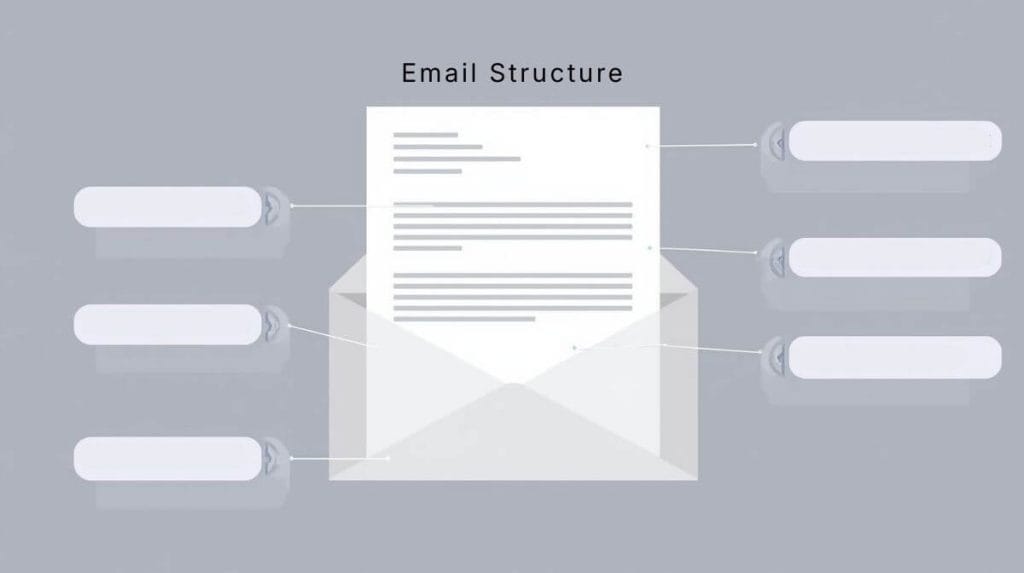
Professional Email Structure Example
Writing professional emails requires clarity, proper formatting, and the right tone. A well-organized email structure ensures your message is understood, creates a positive impression, and encourages timely responses. Using a clear email structure is essential for effective communication in business environments. Below, we explore the essential components of a professional email and provide examples for each section.
Subject: Reminder: Submission of Q1 Reports by Friday
Dear Team,
I hope you’re doing well. I am writing to remind you that the Q1 financial and project reports are due by Friday, 29th February. Timely submission is essential to ensure our review meeting on Monday proceeds smoothly.
Please prioritize completing any outstanding tasks related to your sections. If you anticipate any delays or need assistance, kindly inform me as soon as possible so we can address issues promptly.
For your reference, I have attached the report template and the updated submission checklist. Please make sure all sections are completed accurately and submitted on time.
Thank you for your attention to this matter. Your cooperation is greatly appreciated, and I look forward to receiving all reports by the stated deadline.
Kind regards,
Michael Johnson
Operations Manager
XYZ Solutions
Why this email works:
- Clear subject line highlighting urgency
- Formal greeting
- Polite yet firm reminder
- Reference to attachments
- Call to action with a deadline
- Professional closing and sign-off
Improve Business English Vocabulary Fast for Emails
A strong Business English Vocabulary is crucial for effective email writing in professional settings. Using the right words and phrases helps you communicate clearly, make a positive impression, and avoid misunderstandings. Whether you are sending requests, scheduling meetings, or following up with clients, precise language improves your professionalism.
Here are practical tips to enhance your vocabulary quickly:
- Read business emails, reports, and articles regularly to familiarize yourself with professional terms.
- Maintain a vocabulary list of new words and phrases, including their meanings and examples.
- Practice using phrases in sentences related to your work to internalize them.
- Learn common email phrases for greetings, requests, apologies, and closings.
- Use flashcards or apps to review and test yourself daily.
- Write sample emails using new vocabulary to build confidence in real situations.
By following these steps, you can strengthen your Business/Workspace English Vocabulary, improve your email writing, and communicate more effectively in professional environments. Consistent practice will make your emails more polished, professional, and impactful.